
The Commission for Air Quality Management (CAQM) has implemented Stage 1 of the Graded Response Action Plan (GRAP) in Delhi-NCR after the Air Quality Index (AQI) deteriorated to the 'poor' category. Forecasts indicate the AQI will remain poor in the coming days, triggering restrictions like banning coal and firewood in eateries and limiting diesel generator use.
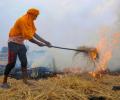
The Commission for Air Quality Management (CAQM) has directed state governments and agencies to implement stricter enforcement mechanisms to address the sudden spike in stubble burning incidents in Punjab and Haryana.

Delhi experiences a biting chill with 'cold day' conditions and dense fog, coupled with 'very poor' air quality. The IMD forecasts continued cold weather and potential light rain.
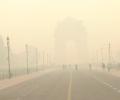
Delhi residents woke up on Tuesday to heavy grey haze darkening the city skies, reduced visibility and the air quality in the 'red zone' after many celebrated Diwali last night by bursting firecrackers beyond the two-hour limit set by the Supreme Court.

The Delhi Pollution Control Committee (DPCC) reports improved air quality in Delhi compared to the same period last year, attributing it to coordinated efforts by government departments. Officials aim to avoid implementing GRAP Stage III restrictions through proactive measures and public participation.

With the Air Quality Index remaining in the severe category, the government has directed schools to switch to online mode for these grades until further notice.

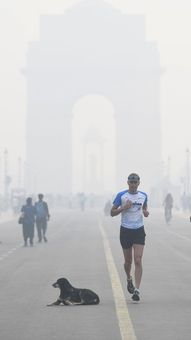
Delhi's air quality deteriorated to the 'Poor' category on October 22, 2026, with the Air Quality Index (AQI) recorded at 237-238 by the Central Pollution Control Board. A smog layer covered landmarks including India Gate, Kartavya Path, Akshardham Temple and Anand Vihar, while joggers carried on their morning routine and vehicles moved through the haze. Old Delhi's Jama Masjid also appeared hazy a day earlier.
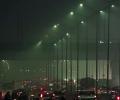
Delhi government mandates 50% work from home for offices and private establishments under GRAP stage three due to severe air pollution. Essential services are exempted.

Over 2,000 pulmonologists and healthcare professionals from India and abroad will gather in Jaipur for NAPCON 2026 to discuss the increasing burden of pulmonary diseases and the critical impact of air pollution on lung health. The conference, organised by the National College of Chest Physicians, India, and the Indian Chest Society, will feature discussions on diagnosis, management, and prevention of conditions like COPD and asthma, alongside advances in interventional pulmonology.
When dealing with severe air quality, your diet can play a crucial role in protecting your lungs and overall health.
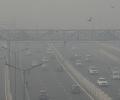
Delhiites continued to breathe toxic air on Tuesday as the air quality edged closer to the severe zone in some areas.

Delhi's air quality plummeted to alarming levels on Tuesday after 24 days, with many areas witnessing a significant spike in pollution despite the strictest measures, including a ban on construction activities and the entry of trucks into the city, coming into force.
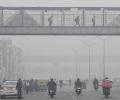
Delhi University and Jawaharlal Nehru University have announced a shift to online classes until November 23 and November 22, respectively, due to the alarmingly high air pollution levels in the city. The decision comes as Delhi and the National Capital Region (NCR) face "alarmingly high" air quality levels, prompting concerns about health and safety. The schedule of exams and interviews remains unchanged, the universities said. The Delhi government has termed the air situation a "medical emergency" and urged institutions to take preventive measures. Several schools and colleges in the region have already started shifting to online classes due to the poor air.
This deterioration in air quality led to prompting enforcement of Stage II of the Graded Response Action Plan (GRAP) in the national capital.
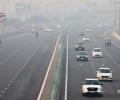
The city's 24-hour Air Quality Index (AQI), recorded at 4 pm daily, stood at 417, making it the worst in the country. On Friday, the AQI level was 396.

Low temperature -- Delhi recorded a minimum of 13.5 degrees Celsius on Tuesday, the season's lowest so far -- allowed accumulation of pollutants, said Mahesh Palawat, vice president (meteorology and climate change), Skymet Weather.
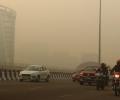
Authorities on Friday had advised people to limit outdoor activities and told government and private offices to cut vehicle use by at least 30 per cent as air quality in Delhi-NCR inched towards the emergency level amid a rise in emissions from farm fires and unfavourable meteorological conditions.
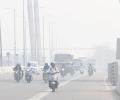
'I think pollution levels have been rising in Delhi for the past 10-12 days. We can feel it in our eyes today. The smog is dense'

The city's air quality dropped to the "very poor" category, with an Air Quality Index of 330 at 10 pm.

Delhi's 24-hour average air quality index (AQI) stood at 407 at 4 pm.

The city's Air Quality Index (AQI) stood at 420 at 8 am on Thursday, compared to 426 at 4 pm on Wednesday. The AQI map prepared by the Central Pollution Control Board showed clusters of red dots (indicating hazardous air quality) spread across the Indo-Gangetic plains.

New Delhi organisers are confident of delivering a 'world-class spectacle' for the upcoming Badminton World Championships, having addressed previous concerns regarding venue cleanliness, air quality, and animal control that marred the India Open earlier this year.

Heavy rainfall in Delhi led to widespread waterlogging, traffic disruptions, and a significant drop in minimum temperatures across the city. Key areas like Lutyens' Delhi, Supreme Court, and AIIMS were affected, while the air quality remained satisfactory.

Delhi is experiencing heavy rainfall and strong winds, prompting the India Meteorological Department (IMD) to issue a red alert, which is impacting ongoing preparations for the crucial BRICS Summit.

The central air quality panel had on Friday allowed authorities in Delhi-NCR to resume physical classes for students in classes 6 and above, colleges and other educational institutions with immediate effect.
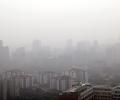
Air quality in Delhi and its suburbs dropped to the severe category again on Wednesday morning, with smoke from post-harvest paddy straw burning in neighbouring states accounting for one-third of the air pollution in the national capital.

The poisonous haze has been causing significant problems for people with existing respiratory issues, according to doctors.

The overall Air Quality Index was recorded at 231 on Sunday which falls in 'poor' category.

Rajasthan Governor Haribhau Bagde highlighted ethanol's potential to protect India from volatile petroleum markets and geopolitical risks, advocating for its widespread production and use. He, along with other officials, emphasised ethanol's role in strengthening the rural economy, ensuring timely cane payments, and combating carbon emissions, while also discussing its historical context and current government support.

Concerns over Canadian wildfire smoke impacting air quality and player health for the World Cup final in New York are easing, with forecasts predicting significant rain and a cold front to clear the haze before Sunday's match, though hot and hazy conditions could still pose risks.

The city's 24-hour Air Quality Index, recorded at 4 pm every day, stood at 418, up from 334 the previous day, and it may trigger stringent restrictions under the third stage of the graded response action plan to mitigate hazardous conditions.

Firecracker bursting till late Sunday night led to a spike in pollution levels amid low temperatures.

Haryana Chief Minister Nayab Singh Saini met with a World Bank delegation to discuss advancing Artificial Intelligence, digital governance, and skill development in the state. The discussions focused on leveraging technology to enhance citizen services, with plans to showcase Haryana's AI Sandbox globally and develop a dedicated AI model for the state.

Researchers at CSIR-CIMFR have developed India's first mobile Smart Algal Liquid Tree (SALT), an innovative air-purification system using microalgae to absorb CO2 and release oxygen. Designed for polluted urban areas, this compact unit offers a sustainable solution where conventional tree planting is challenging, also providing public utility features.
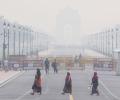
The capital witnessed a clear morning on Friday with the minimum temperature settling a notch below normal at 14.6 degrees Celsius.

The city recorded a minimum temperature of 14.6 degrees Celsius, a notch above normal, according to the India Meteorological Department.
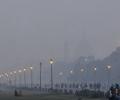
Pollution levels in Delhi during the Diwali period are likely to remain in the higher end of the 'very poor' category in the absence of emissions due to fireworks, the Ministry of Earth Sciences' air quality monitor, SAFAR said.

BrahMos Aerospace expects to develop the first prototype of its next-generation BrahMos-NG missile by 2027 or 2028, while a missile with a range of 1,500 km remains part of its future roadmap and is currently at the conceptual stage, the company's CEO and managing director Dr Jaiteerth Joshi said.
Acentral panel directed authorities to ban the plying of 4-wheeled diesel LMVs in Delhi and adjoining NCR districts and the entry of trucks into the capital.

The central government's Air Quality Early Warning System for Delhi said a "significant improvement in air quality is not likely" owing to slow wind speed, particularly during night time, and contribution from farm fires.
